Wednesday, August 3, 2016
The Beautiful Life of the Leopard Slug
The Leopard slug has migrated to North America from Europe and much to the dismay of gardeners and squeamish 5 year olds they can be found anywhere from underneath boards and rocks to inside flower pots. The Leopard slug is unusually slimy with an overall tawny brown, a light "sole" and attractively spotted and streaked with dark brown. It is as beautiful as a common garden pest could possibly be.
The Leopard slug is claimed to have an unusually wild sex life. The slugs do not have distinct genders and are hermaphrodites, meaning, more likely than not both will leave the sex encounter pregnant. They will then find a dark, damp spot and deposit about 200 large. clear eggs.
What is interesting about Leopard slug mating is one member of the pair will overhang on a ledge or branch on a long bungee made of their own slime. The pair will intertwine hanging on the mucus and exchange their spermatophores. Fortunately, this ritual is performed exclusively after dark.
Slugs are gastropods and are distantly related to squids, oysters and snails. Did you know Leopard slugs do have a shell? It is hidden each one's mantle and looks like a small fold of skin or a fingernail, but is in fact a vestigial shell. If you stumble upon a Leopard slug on the streets of New York City are brave enough to squeeze it gently, you can feel the evolutionary evidence for yourself.
http://www.nytimes.com/2016/07/24/nyregion/the-double-life-of-the-slimy-acrobatic-leopard-slug.html?_r=0
http://www.molluscs.at/gastropoda/terrestrial.html?/gastropoda/terrestrial/limax.html
Tuesday, August 2, 2016
Rare Whale Discovered in Pacific
Sunday, July 31, 2016
Even More Related to Orangutan's Than We Thought
![]() |
| Rocky the Orangutan who was able to mimic human vocal patterns |
Friday, July 29, 2016
Ancient air bubbles and Earth's Oxygen levels
Monday, July 25, 2016
Paleo Gut Used To Study Evolutionary History
Their study concluded:
Sunday, July 17, 2016
The Call of the Sea: Mammalian Evolutionary transitions back to the sea
https://www.sciencedaily.com/releases/2016/06/160622164320.htm
http://www.manatee-world.com/manatee-evolution/
Friday, August 7, 2015
Are Kangaroos Left-Handed?
| Red Kangaroo in Australia |
Wednesday, July 29, 2015
The Importance of the Polar Bear's Y Chromosome
| The polar bear's genetic information is being used to study the development of the species. |
Thursday, December 15, 2011
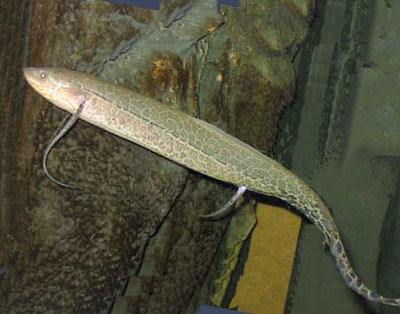
Lungfish evidence to "evolution"
Thursday, December 8, 2011
The Spider Mite
They call it Guppy Love
In the article “They call it guppy love” UCLA scientists discovered an evolution mystery. The male guppy has consistently changed color for over a half a million years but one thing always stayed constant an orange patch. It slightly changed being redder or more yellow at times but it was always consistent. These scientists discovered that it is because that’s what the female guppieslike. The males have evolved over and over again because that is what the ladies like. The orange patches are made up of two things, carotenoids, which are digested, and drosopterins which are produced. They discovered that the males with the middle color orange. Not to yellow and not to red. The females chose the males with intermediate amounts of drosopterins by a significant margin. Males with the right color orange typically produce more offspring because the
females are more attracted to them.
Alien Planet

Tuesday, December 6, 2011
Acquired Traits Can Be Inherited Via small RNA's
Friday, July 22, 2011
Lazy for a Reason
An article on MSNBC.com explains the reason why sloths are the way they are. Sloths move through trees in a similar fashion to monkeys. The only difference is the slothful way sloths move about. Researchers at the University of Jena studied two-toed sloths using X-ray video. They studied how the muscles and joints moved while the sloths traveled. They found that the sloths moved basically like other mammals, like monkeys do. The way they position their legs and the movement of their joints are exactly the same as how a mammal moves, except upside down.
John Nyakatura, an evolutionary biologist at the university, revealed that the sloths have reason to be lazy. Through evolution, sloths ended up with long arms and short shoulder blades, enabling them to have a large reach with minimal movement. This provides them the luxury of conserving energy while moving the same way as other mammals.
This article was interesting because it shows the different adaptations an animal will make in order to better their survival. Martin Fischer, a professor at the University of Jena simply put, "Sloths lead their lives in energy-saving mode." We could definitely learn a thing or two from these sloths. Maybe we can find a way to use our laziness as an advantage!
PHOTO: http://images.nationalgeographic.com/wpf/media-live/photos/000/007/cache/two-toed-sloth_744_600x450.jpg
Thursday, July 7, 2011
Jawless Fish Demise Still A Mystery

Chewing Evolution
An article in Science Daily described the research ongoing at Brown University concerning the evolution of the tongue in different organisms. Every organism has their own way of getting the nutrition they need in order to survive. Specifically, fish, mammals, and amphibians were used in their research. They all used their tongue for the process of digestion, but in different ways.
Research at Brown University found that fish use their tongue in order to thrust food backwards further into their system. On the other hand, mammals use their tongue for better placement of food in the mouth to chew.
The researchers were curious as to where the split in evolution took place between the two types of tongue movements. Amphibians seemed to be the answer because of their tongue characteristics which Brown University plans to further research.