Showing posts with label circadian rhythm. Show all posts

Thursday, August 6, 2015

Bacteria and Circadian Rhythms

Researchers from the Argonne National Library and the University of Chicago recently conducted a study concerning microbes that reside in mammalian stomachs and intestines that appear to have an affect on circadian rhythms.  Previous research has verified the relationship between metabolism and circadian rhythms, so it is not outrageous to assume that the microorganisms that aid in our digestion can also have an affect on how our bodies handle day and night cycles.  There is evidence that these bacteria also have an affect on allergies, mental health, and weight.
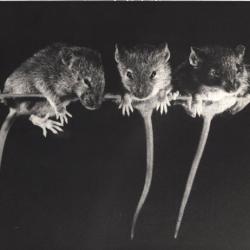
Using mice to conduct the experiment, researchers found that mice with the natural set of microbes (the control) exhibited normal daily microbial cycles, which were defined as having different species flourishing during different parts of the day and producing different compounds.  The compounds, in turn, facilitate the expression of circadian clock genes in the liver.  Another set of mice were given a high fat diet, which reduced the variation in microbial cycle, so less compounds were produced and the mice quickly gained weight.  This, researchers hypothesize, is because too much fat changes the natural compounds microbes produce.  A new set of mice, the “germ fee” mice, displayed a disrupted circadian cycle as well, however without the weight gain.  This demonstrates the possibility of a strong bond between bacteria and the regulation of circadian rhythms.  Understanding the microscopic organisms that reside in us can give us valuable insight into our dietary needs and circadian rhythms.  The researchers hope to continue their exploration of what other diets trigger these responses.

Thursday, July 21, 2011

The Circadian Rhythm for Life

http://upload.wikimedia.org/wikipedia/commons/5/55/Circadian_rhythm_labeled.jpg

In a Science Daily News article a study of circadian rhythms in plants is helping aid in the difficulties surrounding the studies in human health. Both humans and plants have genes in which a twenty-four hour period is used for cell division. The article states, “One of the main human circadian rhythm genes, cryptochrome, has been associated with diabetes and depression. Both of these grew from work with plants.” During circadian rhythms in plants, night time is when there is the most activity present due to the absence of light. There are specific genes at night that aid in plant growth, which help scientists see that there are certain times where human genes are also more susceptible to change. One main idea arising from this article is that the genes harnessed in plants within this time period that help cover up diseases could also be helpful in trying to fight off HIV. Scientists are looking into more ways to understand these rhythms so that new potential health aids can be found.

This holds for a large importance within society because studying what is around us can help aid us personally in the long run. There are similarities within species, such as these aiding genes used throughout circadian rhythms and having scientists closely watch what these genes can do can help in the medical field. It is interesting that plants could help us in finding ways to defend ourselves against diseases and infections. Even though organisms can look very different on the outside, there are many similarities on the inside, we just have to look for them.